
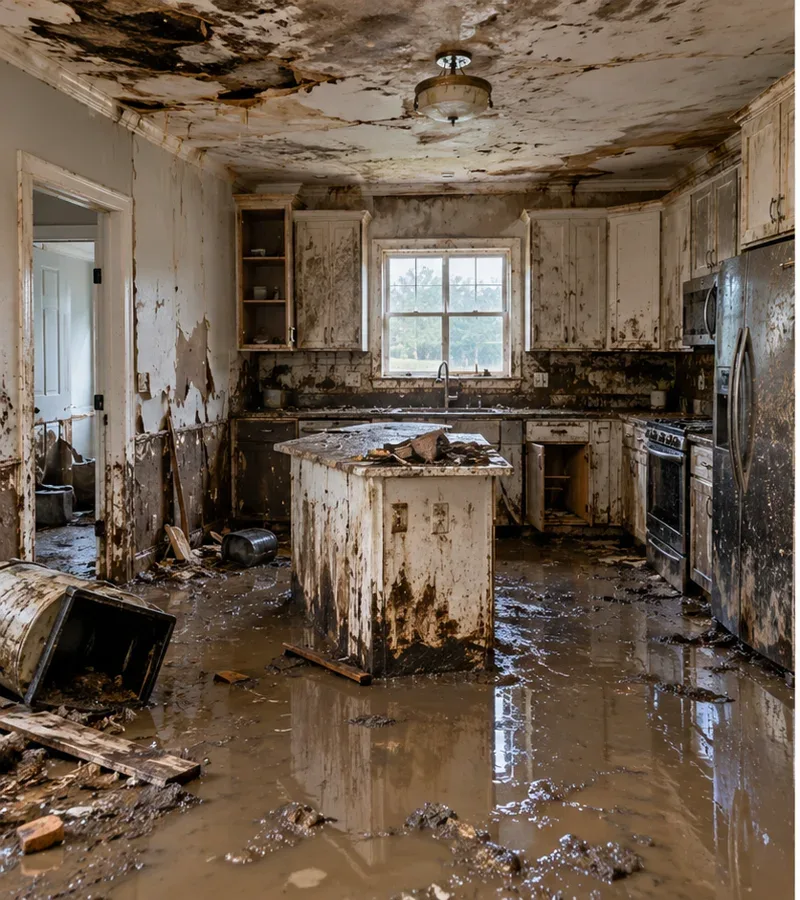
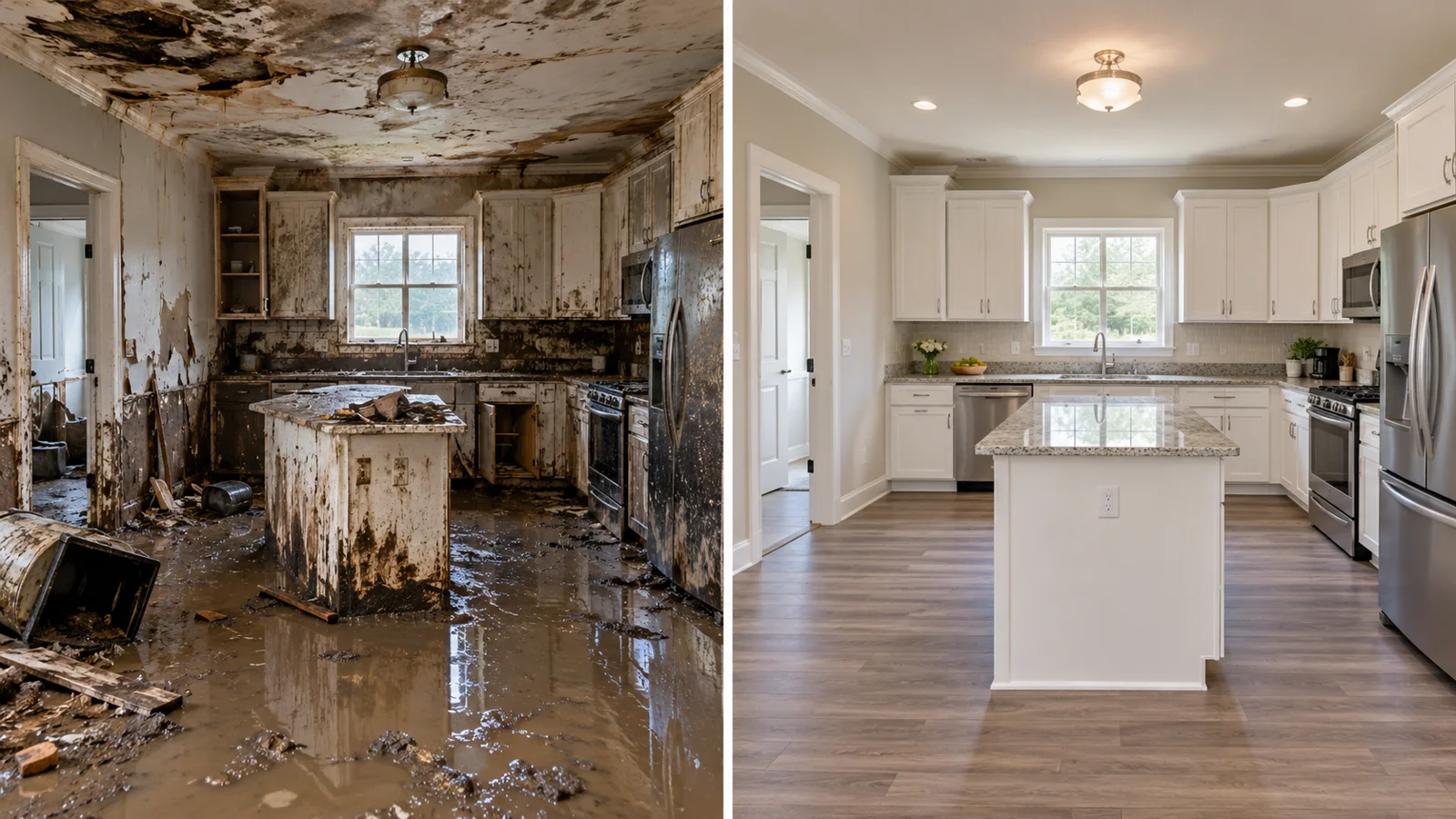
Flood cleanup begins with understanding how water entered, what it touched, and whether anyone can safely access the property. A soaked room is not a complete description of the job: outside runoff, a plumbing failure, and contaminated backup water create different cleanup decisions. Flood Cleanup Phoenix provides a phone contact for discussing the condition of your Phoenix-area property and confirming the next available assessment. Explain the source if known, the affected rooms, and any immediate hazards when you call.
Establish the source before choosing the cleanup scope
A flood event can carry water across several materials in one continuous path. Water entering at an exterior doorway might reach tile first, then a carpeted hallway, then the base of a partition. The visible puddle does not show how much water moved beneath those surfaces. Describe where the water first appeared and the direction it traveled. If that history is unclear, say so rather than guessing. The assessment should account for both the entry point and the rooms where damage is visible.
Make a safe first record
Take photographs from dry, accessible positions. A wide view helps show which rooms connect; closer views can record floor edges, damaged trim, and affected belongings. Write down when the property was last known to be dry and when the water was discovered. Do not walk into moving water or wet electrical areas to improve a photograph. If a water supply can be isolated without approaching a hazard, stopping that source is useful. Otherwise, describe the problem to the appropriate professional before entering.
Water removal is the beginning of recovery
Removing accessible standing water helps expose the condition of the floor and adjoining materials. It does not establish that the structure is dry or that contaminated surfaces are ready for use. After bulk water removal, the next questions concern remaining moisture, residue, porous materials, and access to concealed areas. Ask how these tasks will be separated in the proposed scope. A clear plan distinguishes immediate extraction from drying, cleaning, material removal, and later repairs so you understand which decisions are still pending.
Read the room as connected materials
A finished floor is only one layer of a room. Baseboards, cabinetry, insulation, and floor underlayment can hold water outside the obvious wet patch. Some materials may be accessible for drying; others may need removal or a different investigation. Do not cut into walls or pull up finishes solely to find out what is behind them. Tell the assessor what was wet, which surfaces changed appearance, and whether moisture seems to return. These observations help define the investigation without substituting for measurements.
Separate contents decisions from building decisions
Loose belongings and building materials may need different handling. Identify wet rugs, boxes, furniture, and stored items before anyone moves them into a clean room. Keep a simple inventory of visible damage and ask which items should be assessed separately. Potentially contaminated belongings should not be mixed casually with unaffected contents. Do not assume that a clean-looking fabric is salvageable after exposure. The purpose of an inventory is to support a considered decision about cleaning, drying, disposal, or specialist attention for particular items.
Cost questions that reveal the real work
Cleanup pricing depends on affected area, water depth, source, material condition, contamination, access, and drying requirements. A room count alone cannot capture those differences. Ask what a proposed estimate includes and which tasks are provisional: extraction, debris handling, drying, cleaning, and reconstruction may have separate scopes. No company price schedule has been supplied for this website. The cost calculator lets you explore a budget with your own planning rates, while a property assessment is needed to establish an actual quote.
Before the property moves toward repairs
A room looking better is encouraging, but appearance is not the same as completion. Ask which affected assemblies were checked, whether drying targets have been reviewed, and what condition remains unresolved. Keep photographs and written scopes together so later repair decisions reflect the water event. If storm entry or a plumbing failure caused the problem, cleanup does not automatically correct that source. Discuss the appropriate source repair separately and confirm that the scope accounts for both the damaged interior and the cause.
Questions about this cleanup situation
How long does flood cleanup take?
Removing standing water can take hours, but drying structural materials usually takes several days. Moisture readings, not a calendar date, decide when drying is finished.
How much does flood cleanup cost in Phoenix?
A small clean-water room can start around $1,000, while multi-room or contaminated floods can pass $10,000. A written scope after assessment is the only real quote.
Is it safe to stay in the house after a flood?
Keep people out of rooms with standing water, electrical hazards or sewage. If the water is limited and clean, stay out of the wet area and call for guidance.
Does flood cleanup include mold prevention?
Fast removal and drying are the main protection. If you see mold, discuss it on the first call because it may need a separate scope.
Can I collect floodwater with my household vacuum?
An ordinary household vacuum is not a water-extraction tool. Do not use electrical equipment in a wet or unsafe area. Report the depth and location of pooled water from a safe position and arrange an appropriate assessment instead of experimenting with equipment that is not intended for the situation.
Why does the water source affect cleaning?
Outside water may bring soil or contaminants, while an indoor supply-line event has a different starting condition. Exposure history and the materials involved affect the plan. Describe the actual source, any uncertainty, and what the water contacted; clear-looking water is not proof that every affected surface can be treated the same way.
What should I have ready for the call?
Give the street address, approximate affected area, source if known, whether water is still entering, and a safe way to reach the property. Mention visible electrical hazards and access restrictions first. Response availability, equipment, and job scope should be confirmed directly rather than assumed from a website description.