
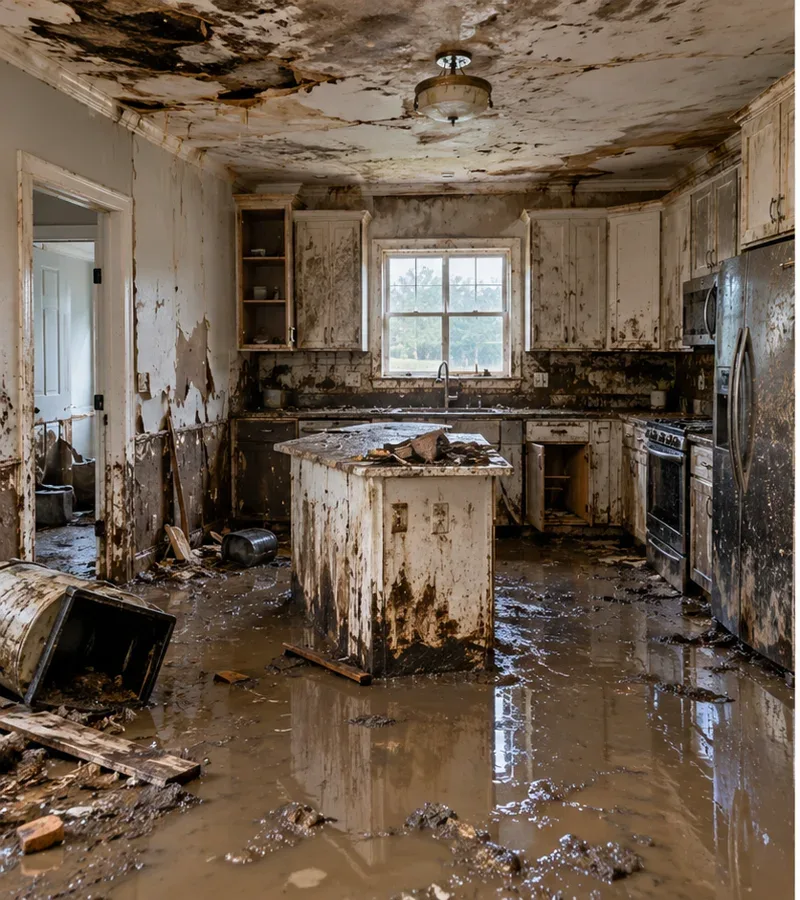
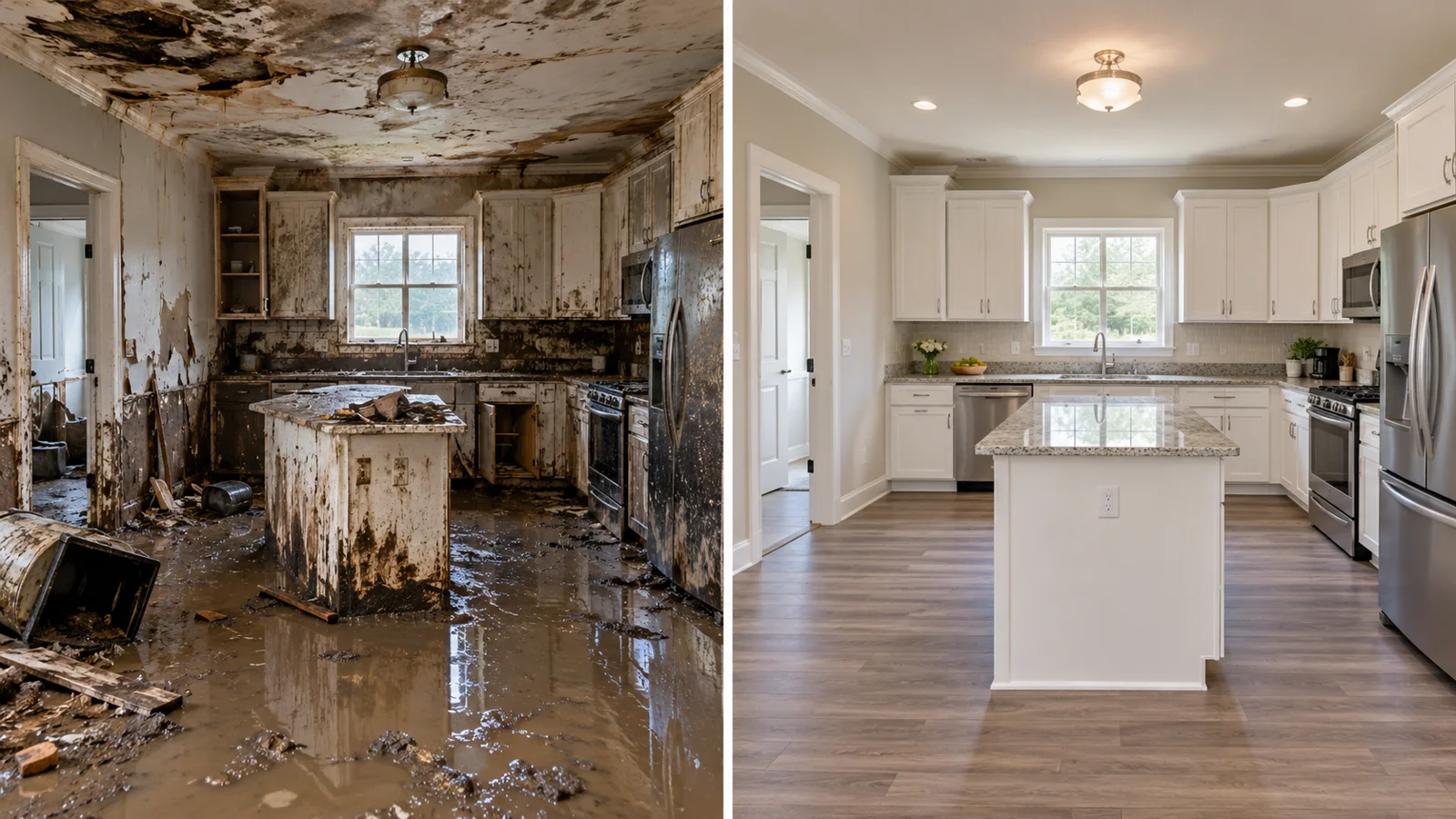
A Glendale garage and the living area beside it can respond very differently to the same water event. Water may collect on a garage slab, cross a doorway and reach materials intended for indoor use. Flood Cleanup Phoenix can discuss cleanup around that boundary rather than treating the garage and home as one uniform surface. Call (480) 919-7058 and explain which side of the threshold became wet first, whether the source is continuing, and what sits in the affected area. The threshold, adjoining wall and stored belongings all matter to the scope.
Inspect the garage-to-home boundary
The step or threshold between a garage and an interior room is a useful observation point, not a guarantee that water stayed out of the home. Note whether there was a visible flow across it, damp trim around the doorway or a stain on the indoor flooring. A small gap at a jamb can allow water into wall materials even when the central threshold looks intact. Photographs of both sides of the opening help explain what was seen before extraction changes the appearance.
A hypothetical Glendale property might have water across a garage slab after an appliance connection fails, with a damp laundry-room doorway discovered later. That example calls for checking the source and the connected assemblies, not assuming all garage water is storm runoff. Record the original water level if a safe photograph shows it, and describe whether the garage door was open or closed. These observations help distinguish a likely entry route from an uncertain one without guessing a flood history for the property.
Consider what the water contacted
Garage water can contact stored chemicals, dirty surfaces, automotive residue or boxes before reaching occupied rooms. The cleanup assessment should consider that route as well as the original source. Do not describe water as clean solely because it began in a supply pipe if it subsequently traveled through a contaminated area. Tell the team about visible residue and the kinds of materials stored nearby, leaving classification and handling decisions to the assessment.
Avoid moving open containers or wet chemical packaging through the home to make space. If a container is leaking, explain its location and any readable label from a safe distance. Wet cardboard can collapse unexpectedly and may conceal sharp objects. Where standing water touches electrical devices, refrain from entering or operating the equipment. The practical goal is to give responders useful information while keeping occupants away from a questionable area. Cleaning a garage slab, drying interior wallboard and evaluating a fabric item are different tasks even when they follow the same water path.
Sort stored belongings before they obscure the assessment
A garage full of storage can make the visible puddle only part of the job. Describe shelves, boxes, spare flooring, tools and any large objects that block access to the perimeter. Items above the observed water line may still obstruct inspection without themselves being damaged. An organized plan can separate movement for access from cleaning or disposal of affected contents, which helps prevent avoidable confusion over the scope.
When it is safe to do so, photograph labels and the arrangement of storage rather than opening every wet box. Ask who will inventory moved items and where dry belongings can be staged. Do not place damp containers against a dry interior wall or directly on unaffected carpet. A wet item carried through the connecting door can extend the work area, especially if the water source is uncertain. For valuable tools or equipment, ask whether evaluation by a relevant specialist is needed before use. Contents recovery should be based on the item and its exposure, not on the fact that it happened to be stored in a garage.
Follow moisture into the adjoining room
The indoor side of a garage entry may have baseboard, insulation, drywall or flooring that retains moisture after the slab appears dry. Assessment can include the bottom of the connecting wall, door casing and nearby rooms reached by the same floor route. If the garage houses a utility appliance, distinguish moisture near that equipment from water that crossed the threshold. Several wet areas can be related, but each still needs to be examined.
Ask how concealed cavities will be evaluated and whether any material must be opened for access. Removal should be explained by actual condition, contamination concerns or an inability to dry reliably. The written description should identify both the garage work and the interior work. Otherwise, a proposal that appears to cover the whole event may leave out a wet closet or the underside of an adjoining finish. During monitoring, progress in the garage should not be used as a substitute for readings in indoor materials that dry differently.
Keep extraction routes workable
Large garage doors may offer an equipment route, but the assessment must also consider security, weather exposure and the path into living spaces. Tell the team about vehicles, narrow side passages, locked doors or steps before a visit. Do not move a vehicle through standing water to clear space if conditions are unsafe. Access planning can often be discussed without requiring an occupant to enter the wet area.
For an occupied Glendale home, work at the garage doorway can interrupt a familiar daily route. Plan another entrance where possible and keep children and pets away from equipment. Agree on whether the connecting door needs to remain in a particular position for the drying setup. If a rental property is involved, establish who can authorize entry and whether management needs documentation. A practical setup accounts for both material drying and ordinary movement through the property, while recognizing that some spaces may need to stay unavailable until their condition is assessed.
Use Glendale-specific public information appropriately
Glendale is listed by Maricopa County as a city conducting its own floodplain management. The county's official page directs floodplain questions to the appropriate municipal agency and provides a county viewer for designated floodplains. Use the exact site address when making an inquiry; nearby streets or a Glendale mailing address are not substitutes for a property-level check.
This distinction matters when garage water follows rainfall. A mapped area does not by itself establish where water entered this particular garage, and an indoor appliance failure does not require a geographic floodplain explanation. Keep photographs of the garage entrance, threshold and any visible runoff path if they can be taken safely. Longer-term changes to drainage, seals or building components should follow an appropriate inspection. Restoration addresses the wet property; the work needed to keep a recurring entry point from admitting water may belong to a separate repair scope. Ask the responsible provider to explain that separation clearly.
Price the actual assemblies and contents
The cost scope for garage-related water damage can involve slab cleaning, extraction, interior material drying, selective removal, storage movement and later repairs. A larger bare concrete area is not automatically more complicated than a small doorway loss that reaches several enclosed layers. Ask for the tasks and affected areas to be described so that the proposal reflects the actual event rather than a broad label such as garage cleanup.
If new information changes the scope, request the supporting observation and an updated written description. Keep a record of items that were moved for access versus items treated as damaged. At completion, confirm whether the connecting wall and interior flooring met the project's drying targets, and identify any threshold or source repair that remains. Do not reinstall trim or cover a questionable floor merely to make the doorway look normal. A clear closeout helps the owner plan reconstruction and understand which part of the original water route has been addressed.