
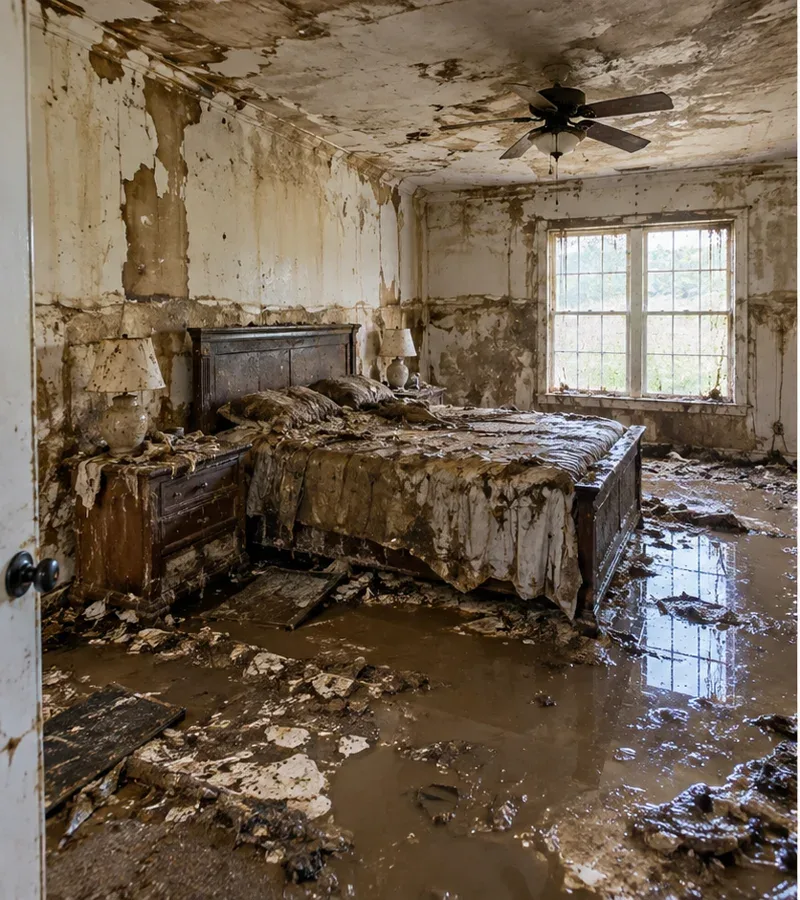
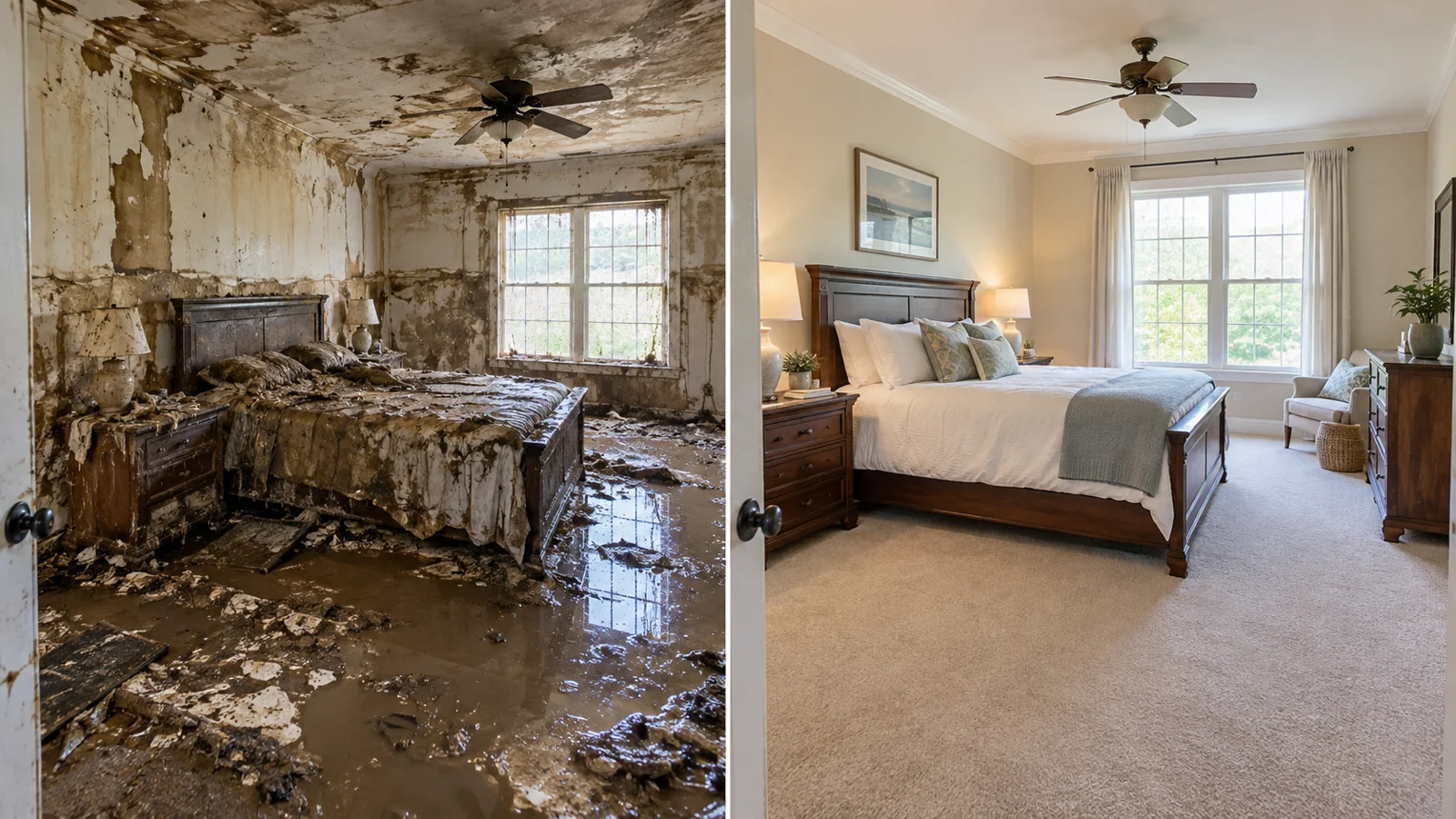
A ceiling stain in Scottsdale is a starting point for investigation, not a complete description of water damage. The moisture may originate above the stained area and travel before becoming visible. Flood Cleanup Phoenix can discuss cleanup and drying of the affected rooms while the source repair is coordinated with an appropriate provider. Call (480) 919-7058 with the discovery time, the rooms below the stain and any known roof, plumbing or upstairs fixture issue. Describe sagging or dripping before anyone enters the affected space.
Treat ceiling condition as an access question first
Before collecting close-up photographs, look from a safe position for sagging, loose finish, active dripping or changes around light fixtures. A wet overhead assembly may be unstable, and a stain near electrical equipment needs appropriate caution. Do not climb onto furniture or puncture a bulging ceiling to investigate it. If safe access is uncertain, keep the room clear and explain the observations by phone.
A hypothetical Scottsdale bedroom might show a stain after water is noticed in a room above. That does not prove the source is directly over the mark. Pipes, framing and ceiling layers can change the route. Describe whether the mark grew, whether water appeared at a wall junction and which rooms share the same ceiling area. Photographs taken from a dry doorway can preserve that information without entering beneath compromised materials. The first assessment should determine whether overhead conditions allow work and what specialists or access restrictions are needed before drying begins.
Trace the source without assigning blame from a stain
Roof leakage, plumbing above a ceiling and water from an upper-floor fixture can produce similar-looking discoloration. The timing may offer clues: a mark associated with rain differs from one that appears while a fixture is in use. Even so, timing alone does not establish the defect. Record what was happening when the water appeared and any recent changes, while leaving final source identification to the appropriate inspection.
If the entry point remains active, restoration equipment cannot compensate for continual wetting. Ask who is addressing the roof, pipe or fixture, and how temporary source control will be coordinated with cleanup. Keep that repair separate in the paperwork when a different provider is responsible. Do not repaint a stain to test whether it returns; covering the surface makes documentation harder and does not remove trapped moisture. A useful plan follows the event from source repair through affected ceiling materials, room contents and the eventual finish work.
Inspect the space above and the room below
The room beneath a ceiling leak can contain several affected zones. Flooring may be wet from drips, wallboard may absorb water at the ceiling junction and insulation may retain moisture above the visible surface. Ask whether the assessment includes accessible space above the ceiling and the walls that connect to it. Where the construction is enclosed, explain how access limitations will be documented.
Material decisions should account for condition and the ability to dry the assembly. Soft, damaged or contaminated components may require removal, while other materials may be candidates for drying when conditions support it. A broad statement that the ceiling looks better after a fan runs is insufficient to establish hidden conditions. Comparison readings, observations and access findings should guide the work. If openings are needed, agree on their purpose and the resulting repair responsibility. For multi-level properties, the inspection may also need access to the source room, not just the room where the stain is visible.
Shield furnishings from overhead water
Overhead leakage creates a different contents problem from a floor-level spill. Water can fall onto bedding, furniture, documents and electronics before collecting on the floor. From a safe position, identify items under the active area and report any particularly valuable or delicate belongings. Do not stand beneath an unstable ceiling to retrieve them. An item may need evaluation even when the surrounding floor seems relatively dry.
Ask how contents will be photographed, moved and staged during the ceiling work. Drying a room is not the same as cleaning a textile or assessing a damaged electronic device. Keep those tasks visible in the scope. When unaffected items are moved, choose a dry staging area that does not block equipment or another inspection route. If the property is occupied, discuss whether sleeping or working in the affected room remains appropriate during assessment. That decision depends on the actual condition, work setup and source rather than the size of the stain alone.
Create a drying plan around ceiling assemblies
Once safe access and source control are addressed, extraction may remove water collected below while drying targets the retained moisture above and around the room. Equipment needs to be selected and positioned for the actual assembly. Air moving across a painted ceiling surface does not necessarily reach insulation or an enclosed cavity. Ask what the drying zone includes and how progress in concealed areas will be verified.
The plan should distinguish material drying from repairs to decorative finishes. A ceiling can need patching or replacement even after moisture is controlled, and paint matching is a later reconstruction question. Keep equipment arrangements consistent with the project instructions and report new dripping or visible changes promptly. Drying duration depends on the assembly, amount of moisture, access and ongoing conditions; a universal timetable would be misleading. Request a documented review of the relevant materials before openings are closed so that the finished surface does not hide unresolved uncertainty about the ceiling cavity.
Connect Scottsdale mapping to the right question
Maricopa County identifies Scottsdale as responsible for its own floodplain management. Its official floodplain page provides the municipal contact route along with mapping resources for geographic floodplain questions. An address-specific inquiry is more useful than a general assumption about a Scottsdale neighborhood. That public information does not diagnose a roof leak or establish the moisture condition of a ceiling.
For this type of loss, local property details matter more than broad statements about citywide exposure. Explain the building layout, the upper-floor or roof access available and any management approval required. If the water event coincided with weather, safe photographs and the discovery timeline can help the appropriate repair provider investigate the entry point. There is no need to invent a nearby flood event to explain a ceiling stain. Separate verified site observations from possibilities, and ask each provider to identify which part of the investigation or repair they are undertaking.
Document the overhead loss from assessment to repair
The written restoration scope should name affected rooms, ceiling or wall materials, contents handling, extraction, drying and monitoring. Ask how any removal or access opening will be recorded. A small visible mark can lead to a larger scope when wet insulation or spreading moisture is found, but the change should have an explanation based on inspection rather than an unexplained addition to the price.
Store photographs, dates and work records in one place. Note when the source repair occurred and whether water reappeared afterward. If another party manages the building, share the relevant observations through the agreed contact rather than assuming the restoration crew can authorize construction changes. Before final ceiling repairs, confirm what is known about the cavity and what remains for the repair contractor. The result should be a clear sequence: source addressed, affected materials evaluated, drying or removal completed, and finishes restored where necessary. That sequence is more useful than simply erasing the stain.