
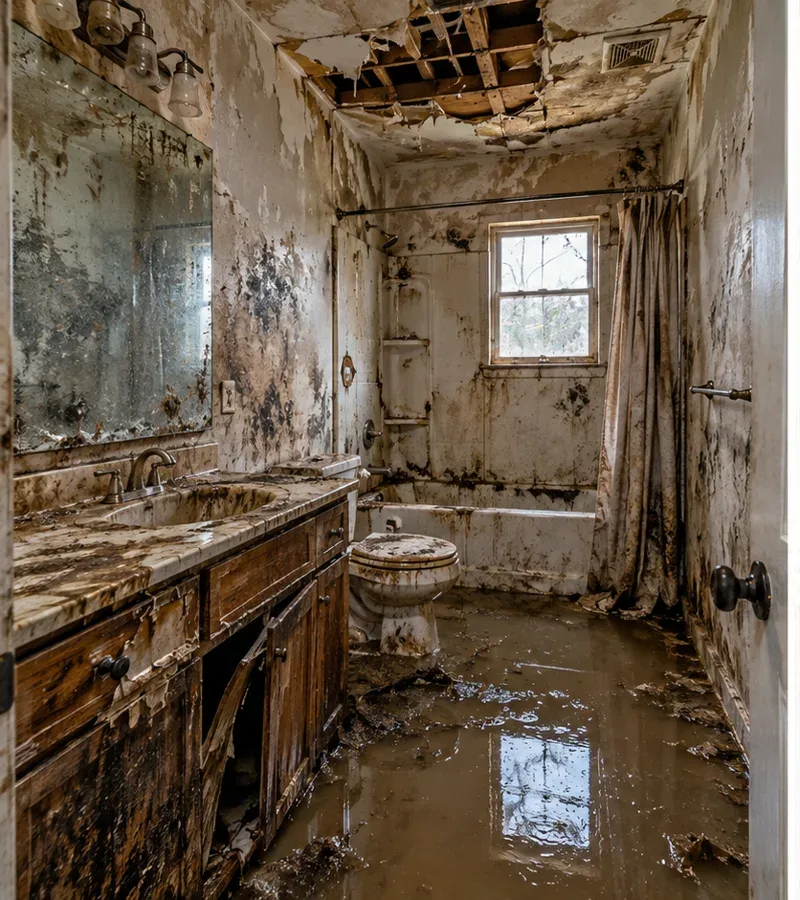
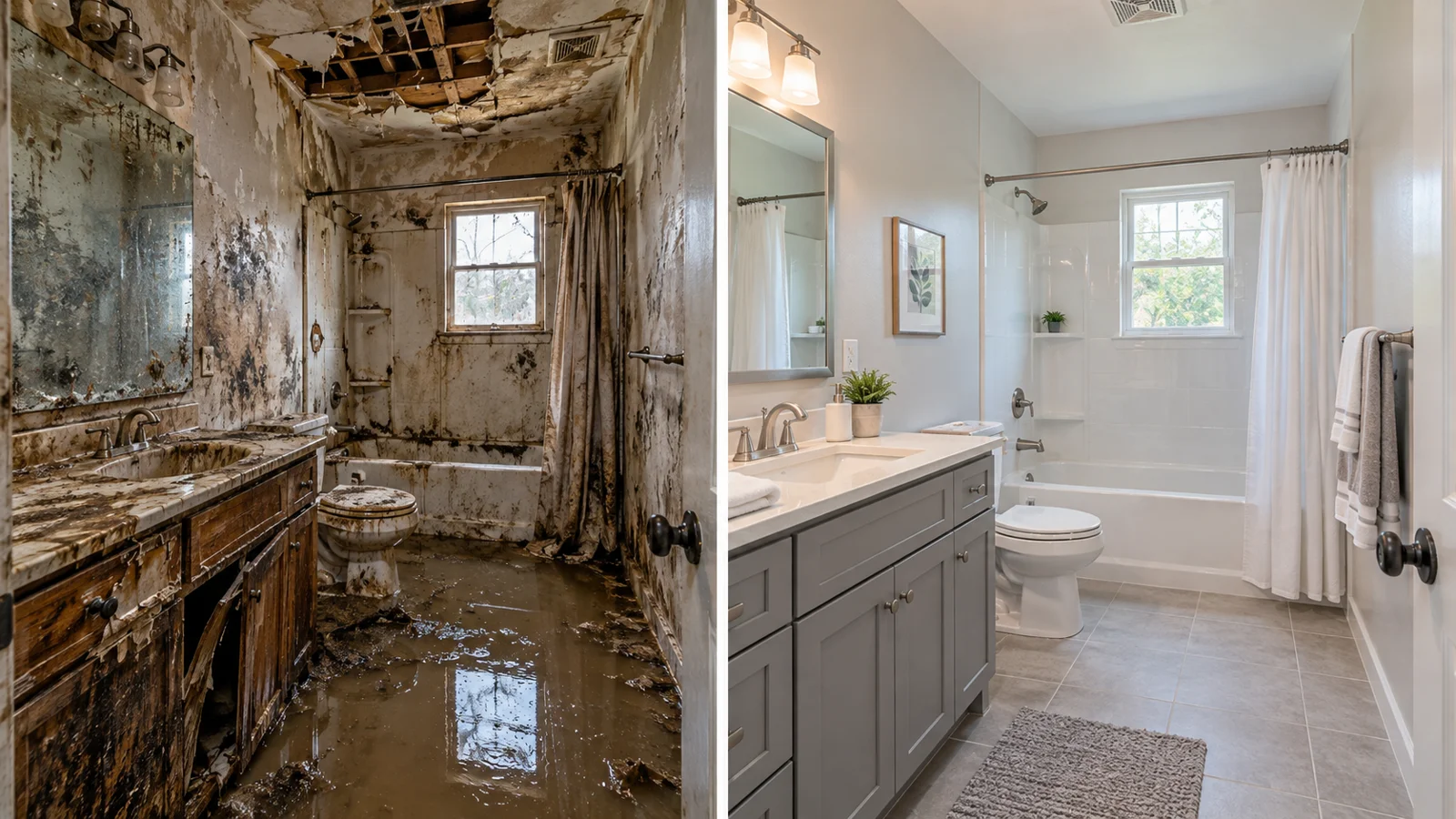
Sewage backup cleanup concerns water and materials affected by wastewater entering a property. The immediate response is to keep people and pets away and avoid contact with the affected area. A plumbing blockage or wastewater-source problem needs appropriate correction, while the contaminated interior requires its own assessment. Call Flood Cleanup Phoenix to describe the backup and confirm the next step. This page explains planning and scope questions; it is not a do-it-yourself procedure for removing contaminated material or treating a room as safe to use.
Keep the affected boundary clear
Do not walk through wastewater to measure the room or move belongings. Identify the visible affected area from an accessible dry position and explain which spaces connect to it. Keep children, pets, and other occupants away. If water is still backing up, report that immediately when seeking help. The apparent puddle edge may not describe every contacted surface, so the assessment should consider the source and travel path. Avoid carrying shoes, tools, or wet items from the affected area into clean rooms.
Correct the source as a separate responsibility
Cleanup does not clear a sewer blockage or establish that the plumbing system is functioning properly. Discuss the backup source with an appropriate plumbing professional and clarify whether discharge is ongoing. Tell the cleanup provider what source-control work has occurred and whether the cause remains uncertain. A written plan should distinguish plumbing correction from assessment, removal, cleaning, drying, and repair. Keeping those responsibilities separate prevents a cleaned surface from being mistaken for resolution of the wastewater-source problem that caused the event.
Porous materials require careful decisions
Carpet, padding, drywall, upholstered items, and stored paper can create different cleanup questions from hard exposed surfaces. Their construction and wastewater exposure affect whether appropriate cleaning and retention are possible. Do not assume that drying alone resolves contamination or that a clean appearance settles the issue. Ask which materials require removal, replacement, or specialist attention and how those decisions will be explained. Do not mix affected porous belongings with unaffected contents while waiting for assessment, especially when doing so would spread the contacted material through the property.
Avoid turning uncertainty into a treatment recipe
The first useful action is describing the event, not selecting a chemical or placing fans in the room. Do not mix cleaning products or apply treatments before the affected materials and source have been reviewed. Unplanned handling can complicate the assessment and may spread material outside the original area. Confirm the proposed methods directly with a suitable provider. The website does not guarantee a particular disinfectant, equipment package, or outcome, and it does not present a universal cleaning sequence for all sewage backups.
Prepare a record without disturbing the scene
Photograph visible damage only from safe dry positions. Record the time the backup was discovered, fixtures involved, rooms reached, and any professional source correction already completed. List affected belongings without opening or handling contaminated storage to create a more detailed inventory. For managed property, identify the person authorized to approve access and material decisions. Keep the factual damage record with scopes and invoices. Documentation supports a clear conversation about the work; it does not establish insurance coverage or substitute for contamination assessment.
Clarify contamination-related costs
A sewage cleanup estimate may include controlled handling, material removal, disposal, cleaning, drying, and later repairs. Source correction can be priced separately. Ask which tasks are included, which materials are covered, and how additional findings would be handled. A simple square-foot figure may omit important parts of this scope. No company or industry range is invented here. If using the calculator, enter rates applicable to the proposed work and keep exclusions visible, then request a site-specific quote rather than treating the result as a guaranteed price.
Review the outcome and remaining restrictions
Before an affected room is returned to routine use, discuss what work has been completed, which materials were removed or retained, and whether any follow-up assessment remains necessary. Do not infer that the room is ready solely because an odor is reduced or the visible water has disappeared. Keep the source-repair and cleanup records together. If rebuilding is needed, clarify when it can begin and who will perform it. Occupancy and access decisions should reflect the actual assessment, not a generic online promise about completion.
Questions about this cleanup situation
Can I use fans on a sewage-affected room?
No. Air movement can spread contamination. Keep the area closed and call a professional.
Will fixing the blockage clean the property?
No. Clearing the line stops the source. The contaminated area still needs controlled removal and sanitizing.
Can carpet and hard floors be cleaned together?
Not always. Porous materials like carpet and pad are usually removed, while hard floors may be cleaned and sanitized.
Is it safe to stay in the house?
Stay out of the affected area and keep children and pets away. If the backup is large, consider staying elsewhere until it is cleaned.
Can I start drying a sewage-affected room with a fan?
Do not set up airflow through an unassessed contaminated area. Keep access restricted and discuss removal, cleaning, and drying in the appropriate sequence with a suitable provider. A household fan does not resolve contamination, and moving air before the affected boundary is understood can complicate the cleanup plan.
Will fixing the blockage clean the property?
No. Plumbing source correction addresses the reason wastewater entered. Surfaces, materials, and belongings it contacted still need their own assessment. Confirm that both the source and interior work have defined responsibilities rather than assuming that a completed plumbing invoice means the affected rooms have been restored.
Can a hard floor and nearby carpet share one cleaning decision?
They have different material characteristics and may require different handling. The assessor should consider exposure, construction, and access rather than applying a surface-only decision to the whole area. Tell the provider about every affected finish and ask which parts of the proposed scope apply to each one.