
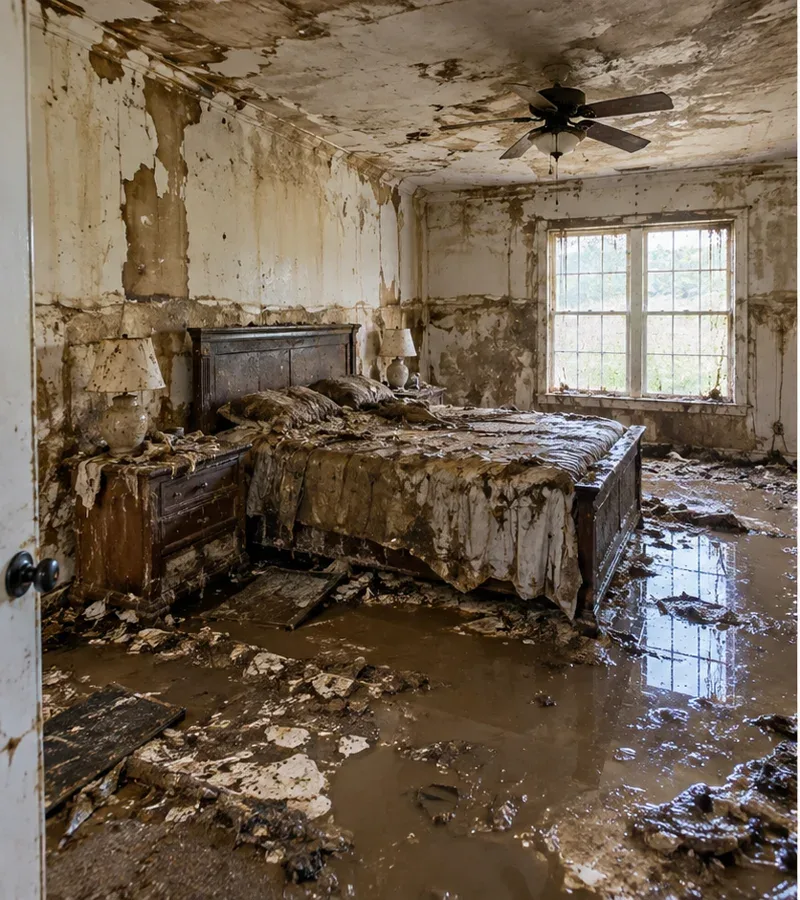
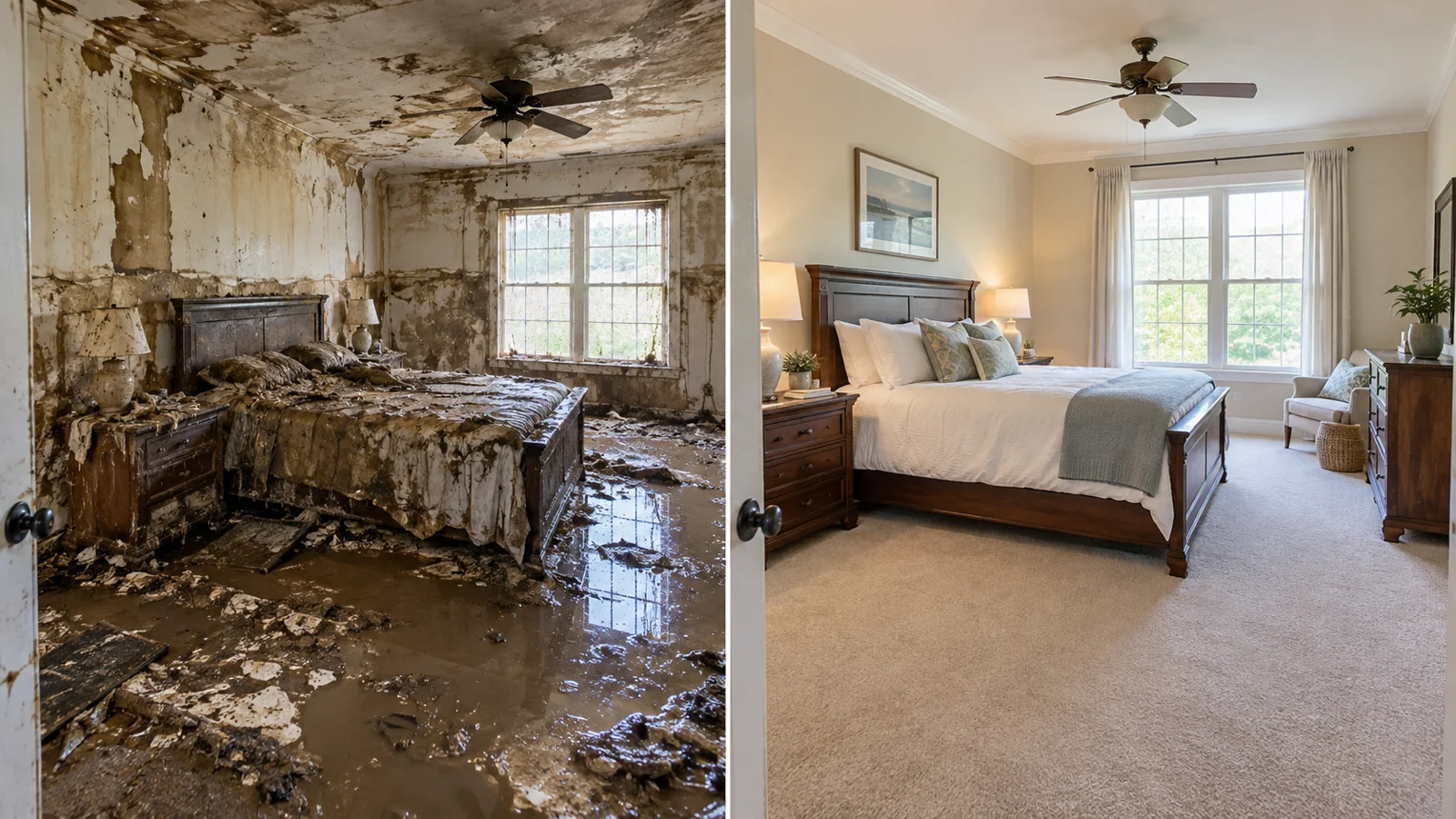
Burst pipe cleanup follows an indoor plumbing failure and the water it releases into the building. The first priorities are safe source control and understanding where the water traveled. A repaired pipe does not by itself restore wet floors, walls, cabinetry, or ceilings below the leak. Contact Flood Cleanup Phoenix with the failed fixture’s location, affected rooms, and whether water is still running. Plumbing repair and interior cleanup should be coordinated while remaining clear about which provider and scope address each task.
Control the leak only when access is safe
If you know the appropriate shutoff and can reach it without entering an unsafe wet area, isolating the source may prevent further discharge. Do not approach wet electrical equipment or force access to a damaged area simply to find a valve. If the shutoff is uncertain or unsafe, describe the situation to the appropriate professional. Restoration work concerns the water’s effects; the failed pipe or fitting needs its own repair. Avoid assuming that a cleanup appointment includes plumbing source repair unless that responsibility is explicitly confirmed.
Record the failure and the discovery timeline
Note when the leak was discovered, when the property was last known to be dry, and any source-control action already taken. Identify the room containing the failed line and the areas where water became visible. Photographs from safe positions can show the relationship between the fixture, cabinetry, floor, and nearby walls. If the leak was hidden, be clear that the exposure duration is unknown. A factual timeline helps the assessment without requiring you to diagnose the pipe’s failure or make an unsupported estimate of water volume.
Follow water into adjoining spaces
A pipe leak can reach room edges, wall cavities, and floor transitions before creating an obvious pool. In an upper-level room, damage may appear on a ceiling below. Describe all observed changes, including stains or wet trim away from the source. Do not remove a wall panel or probe a ceiling yourself to find the route. The damage assessment should establish which assemblies need attention and how safely to access them. Fixing the source stops new water but does not answer those separate material-condition questions.
Begin cleanup with a defined affected area
Initial removal of accessible water creates a clearer setting for moisture assessment. The next work may involve drying, contents handling, cleaning, or decisions about damaged materials. Ask for the affected-area boundary to be explained rather than assuming the scope covers only the room containing the pipe. Give any changes observed after source control, such as a stain enlarging or a floor seam changing appearance. Those observations are useful context, while the actual cleanup and drying decisions still require appropriate assessment of the building.
Organize access and permission for the work
For a rented home or apartment, tell the owner or manager about the failure and identify who can authorize access and material decisions. Describe neighboring units or lower rooms only if they are actually affected; do not assume damage beyond the observations. Keep dry belongings away from the work area when safely possible, and identify wet contents before moving them. A single point of contact is useful when the plumber and restoration provider need scheduling information and when later repair work must be approved separately.
Budget for the aftermath as well as the pipe
A plumbing invoice may cover source repair without including extraction, drying, material removal, or reconstruction. Ask what each quotation includes and avoid combining different scopes without identifying them. Cleanup pricing can depend on affected area, material construction, exposure duration, access, and remaining moisture. No fixed company rates are published on this site. The cost planner uses assumptions you enter; it is helpful only when those rates cover the same tasks you are trying to budget. An assessment establishes the actual restoration proposal.
Review the building before finishes are restored
Once the pipe is repaired and visible water removed, the affected assembly still needs a condition review. Ask how wet materials will be checked and which findings support moving to repairs. Do not paint over a ceiling stain or replace a damaged floor edge before the underlying issue has been considered. Keep the source-repair record with the cleanup and drying descriptions. This organized handoff is particularly useful when a concealed leak required access openings that later need reconstruction by a separate provider.
Questions about this cleanup situation
Should I call a plumber first or cleanup first?
Stop the water and call a plumber right away, then call cleanup. Restoration can be coordinated while the repair is done.
Can clean supply water still cause damage?
Yes. Clean water becomes a bigger problem if it sits, soaking drywall and flooring and supporting mold growth.
What if the leak happened while I was away?
Tell us when you last saw the property dry. Longer exposure usually means more moisture to measure and dry.
Do you repair the pipe?
Pipe repair is a plumbing job. We focus on the water removal, drying and cleanup and can coordinate with your plumber.
Does clean supply water mean there is no cleanup concern?
Source information matters, but the water’s contact with materials and the time before discovery also influence the assessment. Explain the source accurately without assuming that every surface or item can simply be wiped and retained. Drying and material damage remain relevant even when the original supply line is known.
Should I wait for the plumber before calling restoration?
Source repair and cleanup can be discussed while the plumbing issue is being addressed. Explain whether the leak is still active and which areas are unsafe. The appropriate sequence depends on those conditions. Confirm responsibilities so the pipe repair and the affected interior are both considered without assuming one provider handles everything.
What if the leak happened while I was away?
Report the discovery time and the last known dry condition rather than inventing a leak duration. Identify wet rooms, visible material changes, and access arrangements. Unknown exposure can influence the assessment, so preserve that uncertainty in the damage record and any conversation about the proposed restoration scope.