
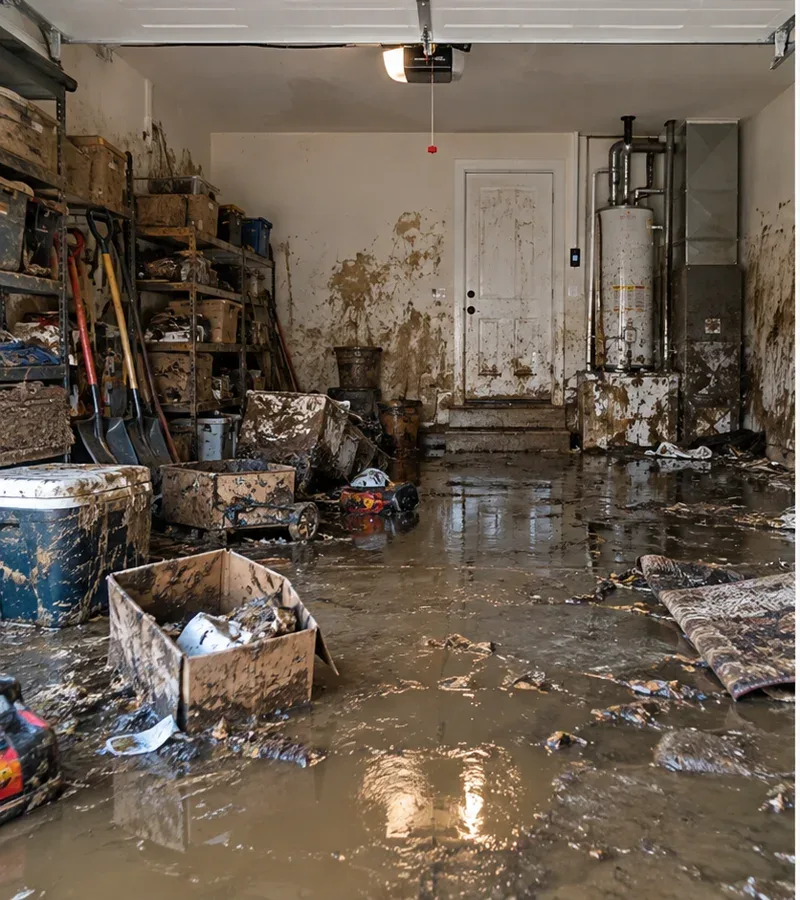
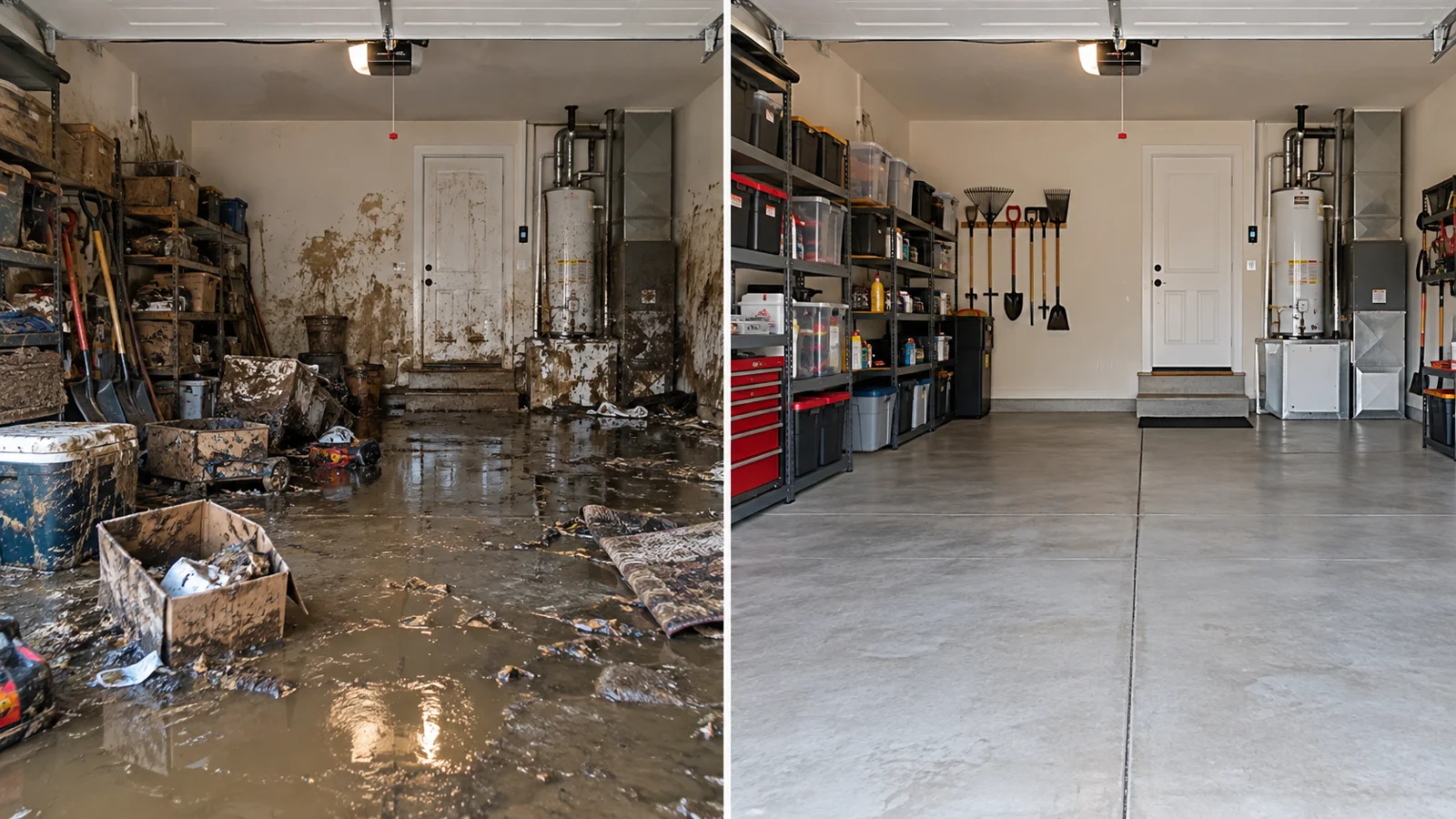
Water damage in an occupied workspace creates two related problems: restoring affected materials and preserving a safe, understandable route around the work. For a Tolleson home or business, Flood Cleanup Phoenix can discuss cleanup with entry, movement and daily use in mind. Call (480) 919-7058 and explain which rooms or work areas are wet, who controls access and whether the water source is still active. Commercial examples on this page are practical illustrations, not claims about local customer jobs. Every scope should follow the actual building rather than assumptions about its use.
Use the Tolleson address and the actual building use
Tolleson is listed by Maricopa County among communities served by the Flood Control District for floodplain management. Consult the county's official resources when checking mapped hazards for a specific site. A city's inclusion in that program does not show that a particular business, home or parcel has suffered flooding. The indoor event still needs its own source assessment.
When calling about cleanup, identify whether the affected space is residential, retail, office, storage or another use. Describe the rooms actually involved without suggesting that all properties of that type have the same exposure. A public entrance, employee entrance and delivery access can lead to very different parts of the same building. Giving the correct route helps the discussion address the damage while respecting areas that remain unaffected.
Establish who coordinates the work area
At a business, the person reporting water may not be the person authorized to approve restoration or arrange repairs. Identify the manager, owner or property representative who can make those decisions. If multiple occupants share the building, explain which suite or unit is affected and who controls access to shared areas. Clear coordination avoids moving equipment through spaces where entry has not been arranged.
A useful initial message includes the source location, affected workstations and routes that can be reached from dry ground. Keep employees and visitors out of areas with unresolved electrical or structural conditions. Do not assume a wet office can remain open because the reception desk is dry. Access planning should consider the entire route, the water's history and the practical ability to separate occupants from active restoration work.
Trace water beneath furniture and partitions
Workspaces can conceal water under desks, filing cabinets, shelving or movable partitions. Visible water may stop at a furniture edge even though the finish continues beneath it. The inspection should identify barriers to access and whether items need controlled movement for measurement or cleaning. A quick view down an aisle cannot establish the condition of every surface beneath stored contents.
Document where each affected piece was located before moving it where practical. Separate records, electronics and inventory from building finishes in the discussion. An equipment technician or contents specialist may be needed for items outside routine structural drying. If the building has shared walls or rooms beyond the visible damage, ask how those interfaces will be assessed. The moisture footprint should reflect measured conditions rather than the boundaries of the department reporting the leak.
Arrange extraction without creating a new obstruction
Extraction equipment, hoses and temporary contents storage can compete for the same limited floor space. The work route should therefore be agreed before large items are moved. Describe any essential doorway, access-controlled entrance or corridor that cannot simply be used as a staging area. If occupants remain elsewhere in the building, explain how they normally enter and leave.
Consider a hypothetical office leak that wets a corridor between reception and a staff room. Pumping the visible water would address only the immediate liquid. The carpet edge, partition bases and adjoining rooms might still require inspection, while the corridor's role in daily movement affects equipment placement. This is an example of planning, not a reported Tolleson project. The scope should account for both the materials being restored and the practical route through the building.
Separate cleaning decisions from business reopening
Removal of standing water does not establish that the affected work area is ready for normal activity. Porous finishes, residues, hidden moisture and equipment condition may remain unresolved. Ask what cleaning is proposed for contacted surfaces and which areas are still restricted. If drain or exterior water is suspected, report that history before employees handle documents or move stock.
A restoration team can explain its work status, but business operations may also depend on equipment repairs, property management decisions and other site-specific requirements. Keep those responsibilities explicit. Avoid asking staff to disconnect restoration equipment for convenience without discussing the consequences. A temporary quiet room or alternate work area may be more practical than interrupting drying. The right arrangement depends on what the space is used for and the condition found during assessment.
Document drying around a changing workspace
Commercial rooms may be rearranged frequently. If furniture or inventory moves during drying, the monitored locations need to remain identifiable. Ask for a record that names the affected walls, floor zones and concealed assemblies being checked. Readings should be interpreted for the relevant material and compared with suitable dry references where appropriate.
Discuss equipment operation during occupied and unoccupied periods. Security procedures, building hours and access restrictions can affect follow-up monitoring, so tell the team about them before setup. A drying plan should state how interruptions will be reported and how progress will be reviewed. The objective is measured improvement in the wet assemblies, not simply having machines present in the room. If the footprint changes after another leak, the scope may need a documented reassessment.
Clarify cost and the boundary of restoration work
A Tolleson cleanup quote should explain extraction, cleaning, equipment, monitoring, contents movement and any removal of building materials. Labor can vary with access restrictions, dense storage or the need to protect unaffected finishes. Square footage alone may not capture those conditions. Ask whether separate rooms or suites are being treated as distinct work zones and how that affects the proposed plan.
The estimate should also identify source repair, equipment servicing and reconstruction that require separate arrangements. Keep approvals specific when new conditions are found behind a cabinet or partition. Photos and measurements can make a proposed change easier to assess. Business interruption and reimbursement questions should be addressed with the appropriate insurer or adviser; a cleanup provider should not be treated as deciding the meaning or outcome of a policy.
Create a handover that the next shift can understand
A completed-work summary should be useful to whoever opens the building next. It can identify monitored rooms, material removals, outstanding repairs and contents still awaiting evaluation. If drying continues, label the active work areas and explain whom to contact about equipment or new water. Avoid relying on an informal conversation with only one employee when several people manage the space.
For a residence, the same principle helps household members understand which rooms remain disrupted and where belongings have been moved. Address the original leak or entry issue separately so restored finishes are not exposed again. Call Flood Cleanup Phoenix at (480) 919-7058 to discuss Tolleson cleanup. Share the exact address, building use, decision maker and access limitations; those details help turn a broad request into a property-specific restoration conversation.