

24/7 emergency water response · Phoenix & surrounding areasSpeak with a specialist: (480) 919-7058
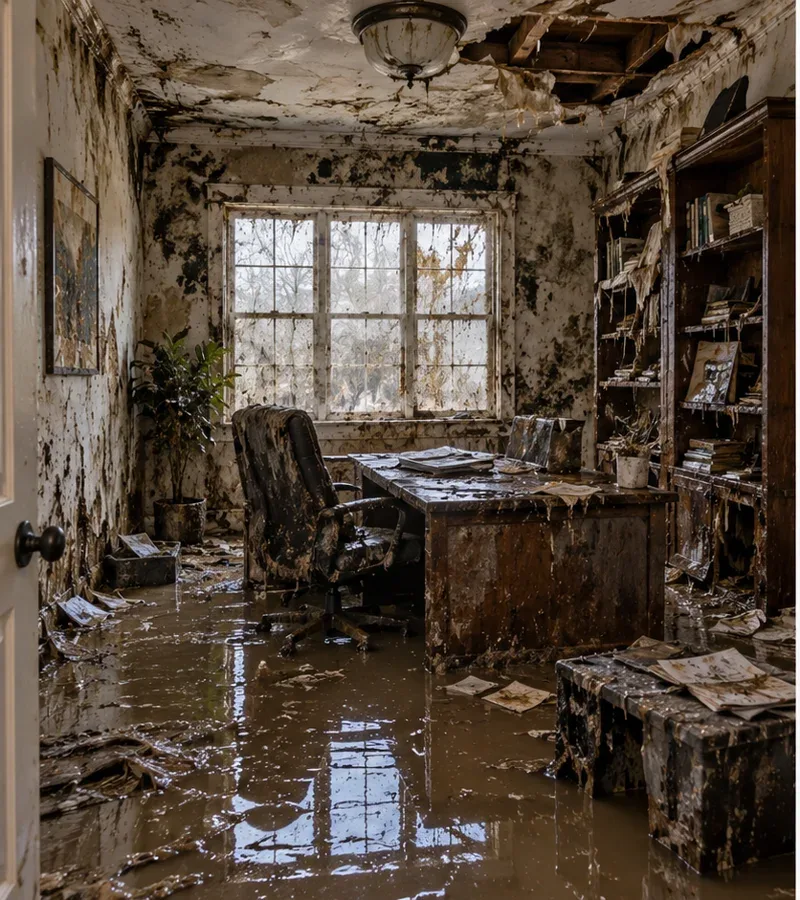
Illustrative interior affected by water damage

Fountain Hills, Arizona · Maricopa County

Flood Cleanup in Fountain Hills, AZ

24/7 flood water removal, drying and cleanup for Fountain Hills homes and businesses, from Downtown Fountain Hills to Fountain Park area.

  • 24/7 emergency calls
  • Serving Fountain Hills
  • Written scope before work
  • Licensed & Insured
  • Affordable Pricing

The short answer

What is flood cleanup
in Fountain Hills?

Fountain Hills is built on hillsides, so water that enters a home often does so at a lower garage or entry level and then moves through terraced floors. Flood cleanup there means checking each level, removing the water, drying the structure and cleaning what was touched, with extra attention to steep driveways and access.

Call if you see

  • Water at a lower-level garage or entry
  • Runoff from a wash or driveway
  • A leak on a terraced or split-level floor
  • Roof or ceiling drips after a storm
Call now · (480) 919-7058

What we provide

Flood & water damage restoration services
in Fountain Hills

Every job starts with a call. We will confirm which of these fit your property.

  • Flood CleanupFrom standing water to a clear recovery plan.
  • Flood Damage RestorationA plan for the materials water leaves behind.
  • Emergency Flood Water ExtractionRemove standing water before it spreads further.
  • Flood Water RemovalA practical first step for accessible pooled water.
  • Flood Damage CleanupClean affected surfaces and review what can be kept.
  • Structural DryingAddress moisture you cannot see from the doorway.
  • Storm & Monsoon Flood CleanupRecover after rainwater crosses the property boundary.
  • Burst Pipe CleanupContain an indoor leak and assess the rooms it reached.
  • Sewage Backup CleanupKeep people away from contaminated water.
  • Emergency Flood CleanupMake the next decision clear when damage is still unfolding.

How we work

How flood cleanup works
in Fountain Hills

Six steps, from the first call to the final moisture check.

01

Call and describe it

Tell us the address, the water source, how deep it is and any hazards.

02

Safety and source check

We review electrical, access and contamination risks before any work starts.

03

Water removal

Standing water is removed so floors, edges and thresholds can be inspected.

04

Moisture mapping

Readings show what is still wet beyond the visible area, including walls and subfloor.

05

Drying and cleaning

Airflow and humidity control dry the structure while surfaces are cleaned and sanitized.

06

Final moisture check

Readings are reviewed and the next step is explained before repairs begin.

Coverage & response

How we serve
Fountain Hills

Fountain Hills is farther from our Phoenix base. Call with your address and we will confirm availability, expected response time and any travel considerations before you decide.

Our base is 2301 N 27th Ave, Phoenix, AZ 85009. We do not promise a fixed arrival time on this website; response is confirmed by phone.

Local guide

Flood cleanup around
Fountain Hills

Neighborhoods, areas and landmarks we use to place your property. Give your address and nearest cross streets when you call.

01

Neighborhoods & areas

  • Downtown Fountain Hills
  • Fountain Park area
  • Eagle Mountain
  • Sunridge Canyon
  • Golden Eagle
  • Fountain Hills Boulevard corridor
  • Shea Boulevard corridor
  • Saguaro Boulevard
  • Four Peaks area
02

Landmarks

  • Fountain Park fountain
  • McDowell Mountains
  • McDowell Mountain Regional Park
  • Fort McDowell Yavapai Nation
  • Fountain Hills Boulevard
  • Four Peaks

Local flood context

What can flood a Fountain Hills property?

Fountain Hills manages its own floodplain matters, and the county lists a Fountain Hills drainage study and plan update. Hillside lots send storm runoff down washes and driveways, so water often enters at lower garage and entry levels.

Fountain Hills official website ↗ · Maricopa County floodplain information ↗

Before and after flood cleanup in a Fountain Hills home
A flooded room before and after drying and cleanup.

Local cleanup guide

Fountain Hills flood cleanup:
the full guide

Updated October 2026. Official sources are listed at the end.

Water entering through an exterior opening needs more than an interior mop-up. The doorway, window or other entry, nearby wall materials and water's outdoor route all inform cleanup decisions. Flood Cleanup Phoenix can help Fountain Hills property owners discuss that evidence safely and plan extraction, cleaning and drying around the actual damage. Call (480) 919-7058 with the address, suspected opening and affected rooms. Photograph the interior from a dry position when possible. Do not approach flowing runoff for a closer view; the assessment can address the entry path without requiring you to document it during active hazardous conditions.

Keep Fountain Hills drainage context property-specific

The county floodplain directory identifies Fountain Hills as managing its own floodplain matters. The county Flood Control District project directory also lists a Fountain Hills drainage study and plan update. Those official resources provide regional and administrative context, but a drainage study does not establish that a particular building has flooded or identify its current interior damage.

Use the exact address for map or drainage inquiries and report the opening where you actually saw water. If the first evidence was a wet wall instead of visible flow, explain that distinction. Restoration inspection should investigate the building materials and source history independently of a broad community description. A street location, map designation or nearby project is background information, not proof that every wet surface has the same cause.

Record an entry path from a safe position

Useful photographs show the interior opening, nearby floor and wall changes without requiring anyone to enter flowing water. Note when the water appeared, whether rainfall was ongoing and whether the entry was observed directly. Describe any debris or sediment inside. If you suspect several openings, identify each rather than forcing the evidence into a single explanation.

Do not climb onto a roof, approach unstable ground or enter a flooded outdoor area to collect evidence. A later inspection can assess accessible exterior features after conditions permit. Safety and source control take priority over a perfect photograph. Keep the initial notes factual: water beneath a door, wet trim beside a window or staining below a ceiling are observations; the underlying defect may require an appropriate repair professional to diagnose.

Distinguish the opening from the underlying cause

Water visible at a doorway can relate to exterior accumulation, an opening detail or another source nearby. Similarly, staining beneath a window does not prove the window itself is the only cause. Cleanup should identify the observed path, while the source investigation determines what repair is needed to prevent recurrence. Those tasks may involve different specialists.

Ask whether temporary source-control work is part of the agreed scope and who will handle permanent repairs. Removing wet floor material will not correct an unresolved exterior entry. Keep repair records alongside the restoration documents so the handover clearly separates what was dried from what was fixed. If another rainfall produces fresh water during the work, report it immediately and request reassessment rather than assuming the original moisture readings still describe the current event.

Account for the water's outdoor contact history

Water that crosses an exterior surface can carry material into the building, and its appearance alone does not determine suitable treatment. Report contact with landscaping, pavement, storage or visible debris if known. Do not handle affected porous contents as though they were exposed only to a contained supply leak. The source and contact history should inform cleaning and removal decisions.

Keep wet rugs, cartons and furniture separated from unaffected areas until their handling is assessed. Photograph contacted items from safe locations and note where they sat relative to the opening. A cleaning plan should explain the affected surfaces, products or methods proposed and any material that is unsuitable to retain. Avoid a blanket promise that every item can be cleaned; condition and construction matter alongside the outdoor route.

Trace moisture beyond the threshold or window

The most visible entry point may be a small part of the footprint. Water can reach flooring edges, wall bases, insulation or an adjoining room before the open floor is noticed. Fixed cabinets or furniture near the opening can obstruct inspection. Tell the team about those barriers and any changes on the opposite side of a wall.

A hypothetical Fountain Hills home might have water enter beneath an exterior door and spread along the floor edge behind a cabinet. Extraction at the doorway would not evaluate that concealed section. This example is an explanation of a possible path, not a reported job. A useful inspection would map the observed moisture, identify which materials can be measured now and explain what access is needed before deciding whether the cabinet or wall assembly can be retained.

Combine extraction with measured structural drying

Removing standing water helps establish a workable area, but the retained materials need their own drying plan. Ask which assemblies are wet, which will be removed and where readings will be recorded. Flooring substrates and concealed wall layers may require access that a fan pointed at the doorway cannot provide. The plan should explain the reason for any selective opening.

Monitoring should distinguish changing room conditions from the moisture status of particular materials. Suitable unaffected references can support interpretation where appropriate. If the entry recurs or equipment operation is interrupted, discuss how the assessment will be updated. Completion should follow measured findings and the stated material criteria, rather than an assumed duration based only on the weather or the amount of visible water originally present. Finish repairs can then be coordinated with a clearer understanding of the remaining work.

Plan access, contents and daily use around the opening

An affected exterior doorway may also be the main entrance or the route to a frequently used room. Tell the team about alternate entry options, occupied spaces and anyone who needs an unobstructed path. Temporary equipment, hoses and moved belongings should not create an unplanned bottleneck. If occupants cannot safely avoid the work zone, explain that before setup.

Identify a dry holding area for clean belongings and a separate place for items awaiting evaluation. Do not place wet contents against clean walls while clearing the entry. A contents list should record the original location, visible condition and proposed handling where possible. Important papers, electronics or irreplaceable possessions may require separate discussion. Those practical details can influence labor and scope even when the visible wet floor area near the opening appears relatively small.

Understand scope, repairs and the final record

A Fountain Hills cleanup estimate should name the affected rooms and include extraction, cleaning, drying equipment, monitoring, material removal and contents handling as applicable. Ask which exterior repairs, finish replacement or specialty services are excluded. Cost depends on the footprint, water history, access and construction; a drainage map or one photograph cannot establish a reliable total.

At handover, review what was monitored, what was removed and what still needs source repair or reconstruction. Keep photographs and repair notes for your own reference, and discuss insurance questions directly with your representative. For cleanup assistance, call Flood Cleanup Phoenix at (480) 919-7058. Describe the actual Fountain Hills entry opening, the rooms affected and any uncertainty about the route. That conversation can focus on evidence and practical next steps without assuming a neighborhood history or promising an outcome before inspection.

Cost table

Fountain Hills flood cleanup
cost table

General planning ranges. Your price depends on the size of the area, the water source and what must be removed.

SituationTypical planning rangeWhat moves the number
Minor flood, one room (clean water)$1,000 – $3,500Room size, flooring, how long the water sat
Several rooms or a whole floor$3,000 – $12,000+Square footage, drywall, drying days
Storm or flood water, per sq ft$4 – $9 / sq ftOutside water carries soil and contaminants
Sewage or Category 3 water, per sq ft$7 – $12+ / sq ftContainment, removal of porous materials, disinfecting
Structural drying and monitoring$500 – $3,500Equipment count and days on site
Hillside home with lower-level entry$3,000 – $12,000Multiple levels, driveway access

General industry planning ranges, not a quote or a Flood Cleanup Phoenix price list. A written scope after assessment is the only reliable number.

Service area map

Map of
Fountain Hills, AZ

Approximate area for reference. Call with your street address to confirm service and access.

Flood cleanup FAQ

Fountain Hills flood cleanup
questions answered

Do you offer flood cleanup in Fountain Hills, AZ?

Yes. Call (480) 919-7058 with the address and what you see, and we will confirm availability for Fountain Hills. Call with your address and we will confirm availability, expected response time and any travel considerations before you decide.

Which parts of Fountain Hills do you serve?

We take calls from across Fountain Hills, including Downtown Fountain Hills, Fountain Park area, Eagle Mountain, Sunridge Canyon and other areas. Give the street address and nearest cross streets so we can confirm access.

What causes flooding in Fountain Hills?

Fountain Hills manages its own floodplain matters, and the county lists a Fountain Hills drainage study and plan update. Hillside lots send storm runoff down washes and driveways, so water often enters at lower garage and entry levels.

How much does flood cleanup cost in Fountain Hills?

Small clean-water rooms can start around $1,000, while multi-room or contaminated floods can pass $10,000. See the planning table on this page; a written scope after assessment is the only real quote.

How far is Fountain Hills from your base?

Fountain Hills is farther from our Phoenix base. Call with the address and we will confirm availability, response time and any travel considerations.

Do you work on steep or hillside driveways?

Yes. Tell us about driveway slope and parking so we can plan equipment access safely.

Does insurance cover flood cleanup in Fountain Hills?

It depends on the water source and your policy. Sudden pipe failures are often treated differently from rising floodwater, which standard homeowner policies commonly exclude. Photograph everything and contact your insurer early.

Should I photograph runoff outside during the storm?

Only use a safe dry position; do not approach flowing water, unstable areas or a roof to improve the record. Interior photos and factual notes can still explain the observed entry. An accessible exterior inspection can be arranged after conditions permit. Evidence gathering should not require entering an active hazard.

Does a drainage study show that my house caused or suffered this damage?

No. A published drainage study provides planning context and does not establish the cause or extent of a specific indoor event. Use the exact address for official mapping questions and a building assessment for the current loss. The observed opening, timing and material findings are the relevant restoration evidence.

Is repairing the doorway included in cleanup?

Ask for the written scope. Extraction and drying may be separate from permanent door, window, roof or drainage repairs. Clarify who will address the source and how it will be verified. A completed drying record should identify any remaining repair task so restored materials are not exposed again by an unresolved entry.

Flooded in Fountain Hills? Call and describe what you see

Call Flood Cleanup Phoenix(480) 919-7058
☎ Call Now · (480) 919-7058

Privacy Policy

The calculator runs in your browser. The request form prepares notes locally and does not send them to this website. Choosing the messaging link opens your device’s messaging app; you decide whether to send. Avoid including sensitive information.

For privacy questions, call (480) 919-7058. Hosting providers may process technical connection information to deliver this website.

Terms of Service

Website guidance is general information. Confirm service scope, availability and pricing by phone. Calculator totals use your entered planning rates and are not company quotes. Actual costs depend on an on-site assessment.

Do not enter hazardous areas to follow website guidance.